|
|
|


|
Safety_Critical_Machine_Learning |
|



|
bridging the gap between shallow and deep networks… ARCHER™ (Advanced Restricted Coulomb
Hidden Energy Recognizer™) is a technology that allows us to overcome the
application gap between deep and shallow neural networks. The paper from MIT “When and Why Are Deep Networks Better than Shallow
Ones?” (Hrushikesh Mhaskar, Qianli Liao, Tomaso Poggio) explains the current limitations of shallow networks compared to deep
networks: it can be deduced that as the complexity of a problem increases,
the number of parameters of a shallow network grows exponentially while that
of a deep network grows linearly. This paper describes technically very well
the advantages of deep learning technology over shallow neural models. The distribution of information across all its parameters in a deep
network is what makes it so powerful and at the same time so inexplicable in
its inference. On the contrary, shallow networks allow maintaining a semantic
link between the individual parameters and the individual pieces of
information learned, guaranteeing explainability of
the inference at the cost of exponential growth with respect to the
complexity of the problem or linear growth with respect to the size of the
training set. The exponential growth of parameters certainly does not
represent a storage problem but the creation of a SIMD (Single Instruction
Multiple Data) processor capable of processing all those parameters in
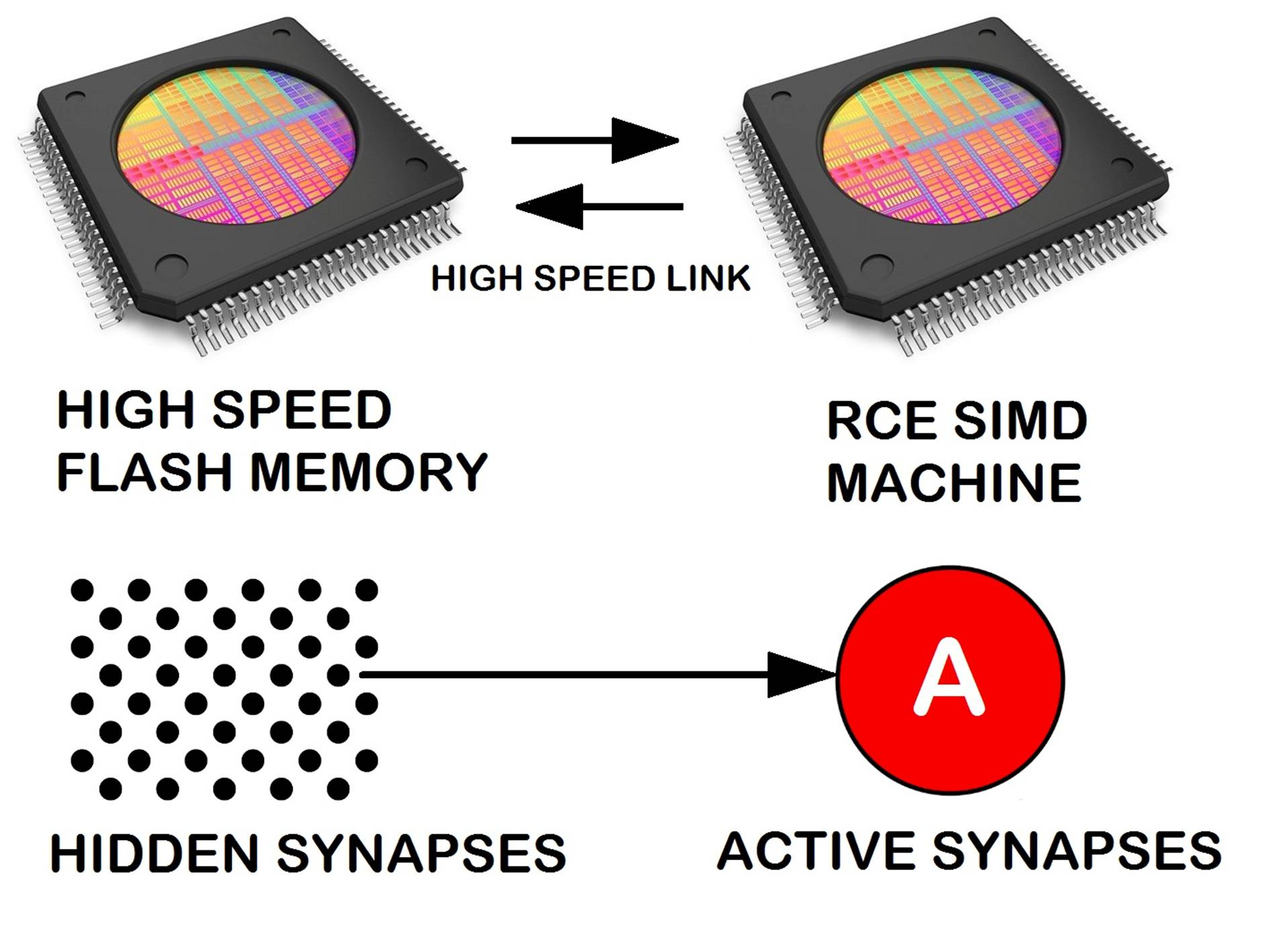
parallel is currently technologically impossible. MemorY To High Operational Speed™ from aerospace…trillions of “Jennifer Aniston neurons“ processed in real
time… We have developed MITHOS™ (MemorY To High
Operational Speed™) technology for the creation of neural classifiers
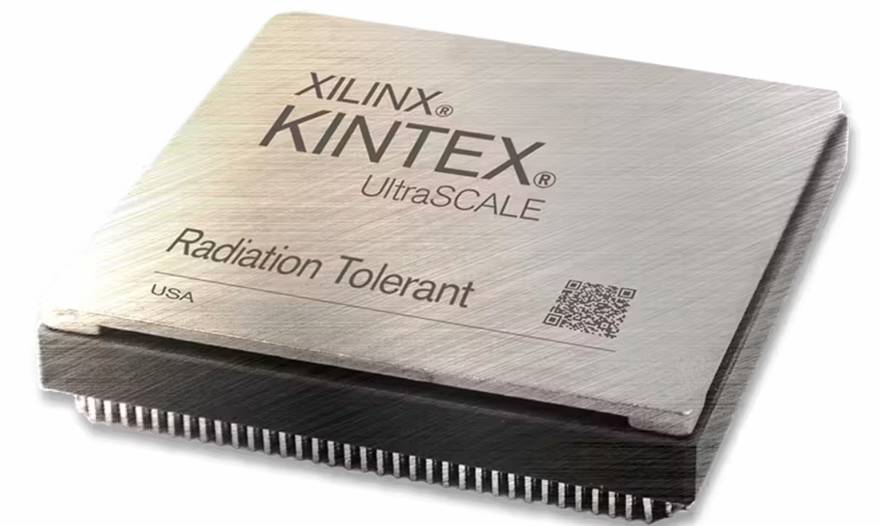
operating in real time on Von Neumann RAD-HARD processors such as the BAE
SYSTEMS RAD750™ for use in the aerospace sector. Then we thought of applying those results in a hardware context based
on neuromorphic chips with RBF (Radial Basis
Function) architecture and RCE (Restricted Coulomb Energy) learning
algorithm. In theory and in the software POCs
everything worked, but would it have been efficient in hardware?
Surprisingly, we realized that nonvolatile memory
technology and inter-chip communication interfaces have now achieved
performance levels that allow our technology to be extremely high-performance
in a hardware implementation with neural chips (e.g. Neuromem®
IP). We have therefore filed a patent for this hardware implementation of
MYTHOS™. It's a patent on a hardware platform that accelerates explainable AI
without requiring a single line of programming because the machine learning
algorithm is hard-wired into the hardware. It's an AI acceleration platform
that processes millions, billions, or trillions of "Jennifer Aniston
neurons" (or “concept cells”) in real time. When we talk about
"concept cells" we are referring to concepts that range from the
lowest level (hand, eyes, mouth) to the most complex level (Jennifer
Aniston). Yet we weren't satisfied. It's still a classifier...what about general
regression? And then we were obsessed with the DARPA program HyDDENN (Hyper-Dimensional Data Enabled Neural Networks). We wanted to design a machine learning acceleration platform that could
be used in any application context without a limit on the input size.
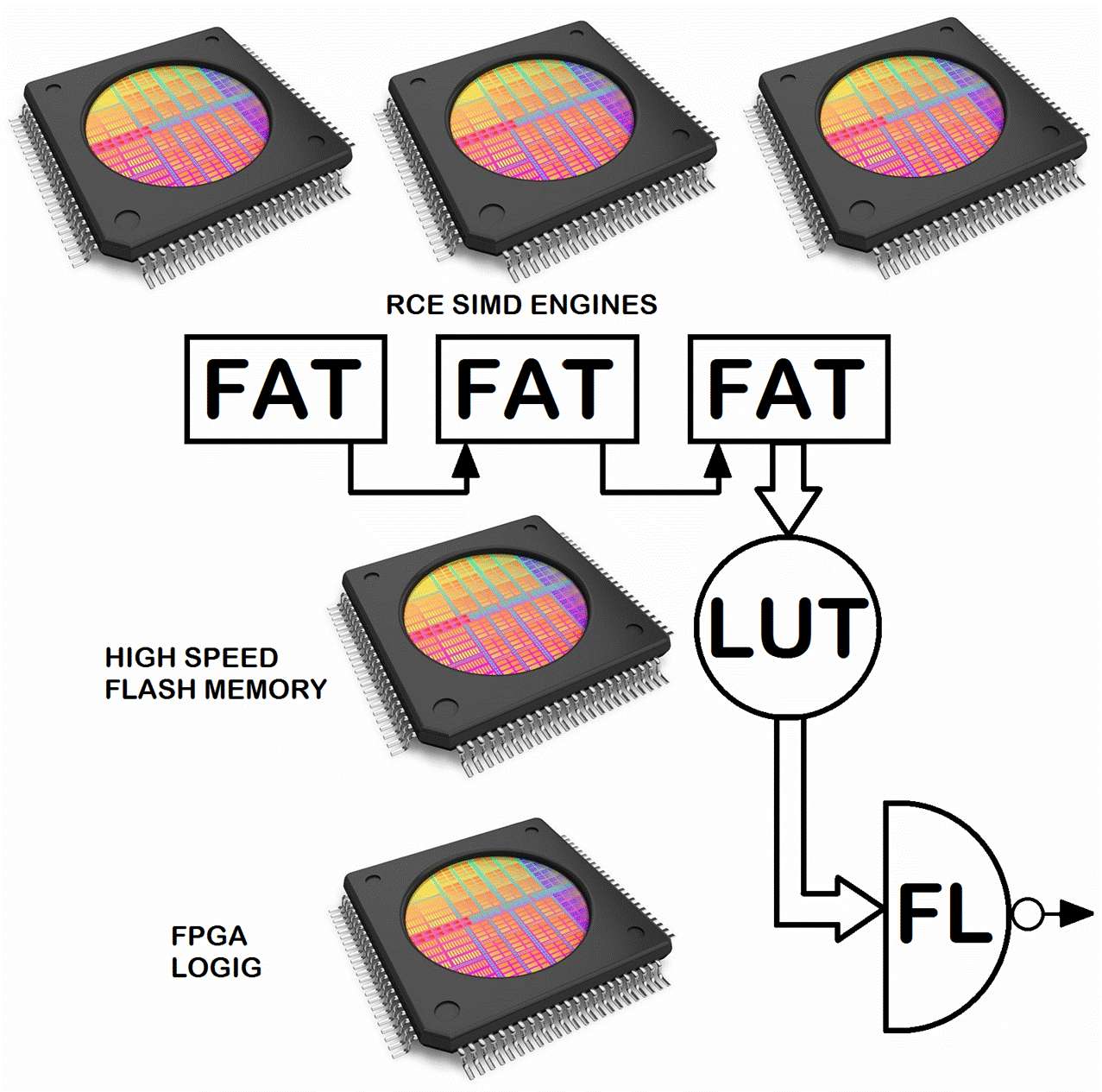
Field Agnostic Tag Categorizer™ Fuzzy Logic Average Table General REgression ENgine™ explainable general regression… We wanted to design a machine learning acceleration platform that could
be used in any application context without any input size limitations. We
developed the FatCat™ (Field Agnostic Tag
Categorizer™) hardware technology to scale categorization with current neural
classifier chip implementations. This technology, which may be replaced with
future evolutions of neural classifier chips, allows us to address millions,
billions, or trillions of records in LUTs (Look Up
Tables) and merge them to perform an explainable general regression. FatCat™ is currently a patent pending technology. We
designed specific hardware to optimize general regression to achieve maximum
execution speed and accuracy, but also with the ability to trade off accuracy
and speed for each application context. We have called this technology FlatGreen™ (Fuzzy Logic Average Table General REgression ENgine™) and it is
currently patent pending.
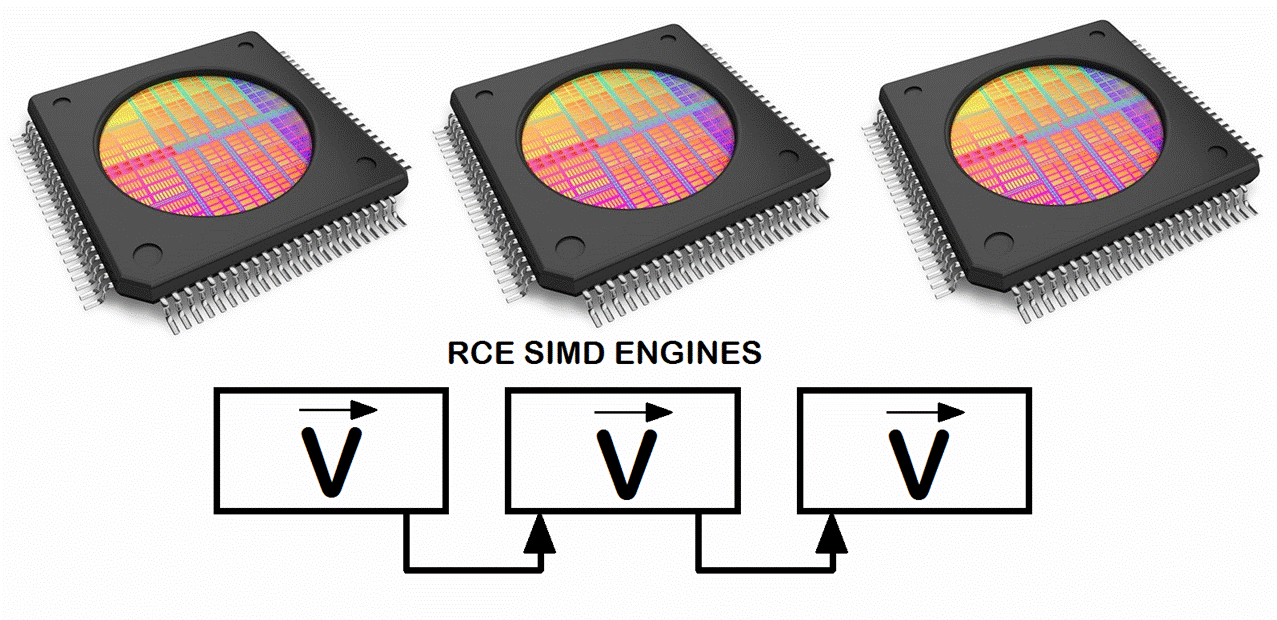
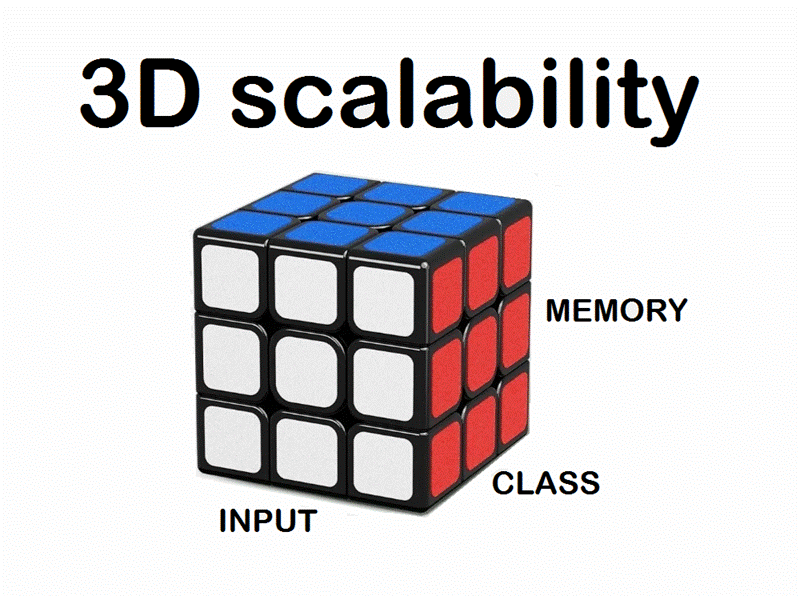
HYperDimensional RecOrd Generalization ENgine™ full scalability of input data size… Complete scalability of the input data size was the third goal. We
developed a technology based on processing pieces of information with multiple
RCE processing elements. It's a technology similar to bit-slice processors,
but in this case the scalability isn't based on the size of the binary word
but on the size of the data vector. We called this type of scalability
V-slice. This is also made possible by the speed of the communication bus.
The name of this Pat.Pend. technology
is Hydrogen™ (HYperDimensional RecOrd
Generalization ENgine™).
|
|
|
Neuromem® IP |
|
A game changing (4 x Pat. Pend.) technology: continuous_learning no_programming explainable_classification explainable_general_regression statistical_ consistency_selective_availability noise_ sensitivity_control input_data_size_scalability applicable to: analytic_AI, LLM, generative_AI advantages over the state of the art: step-by-step explainability recovery of
training data involved in the inference possibility of
targeted corrective interventions easier human
accountability mapping lower clock
frequency lower energy
consumption application sectors: safety-critical
contexts, medicine, aerospace, defense, cyber
security, Rad-Hard FPGA based orbital data centers existing applications compatibility: ARCHER™ is a
machine learning technology that replicates the functionality of DL on
GPU-based architectures. It is therefore portable within any
application-level architecture that uses DL modules for classification and
general regression. |

|
|
|
General Synaptics Aerospace_and_Defence_Machine_Learning_Company VAT NUMBER:_IT02670700992 REA NUMBER: GE-503104 Email:_luca.marchese@synaptics.org |
|
|
|
Copyright© 2026 General Synaptics |