|
|
|


|
Safety_Critical_Machine_Learning |
|


|
|
Hydrogen™ (HYper-Dimensional RecOrd Generalization ENgine) is the result of a research started
to give answers to some issues raised in the DARPA HyDDENN (Hyper-Dimensional
Data Enabled Neural Networks) program. Hydrogen™ is a VHDL project aimed
at creating a V-SLICE processor to accelerate the Mythos™ algorithm without
limitations on input dimensionality. |

|
|
· Mythos™ acceleration
processor ·
Distributed memory ·
V-SLICE Daisy-Chain ·
Hyper-Dimensional input ·
No MAC operations ·
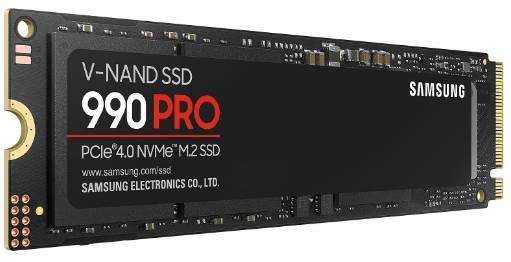
Huge synapses DB on SSD
|
|
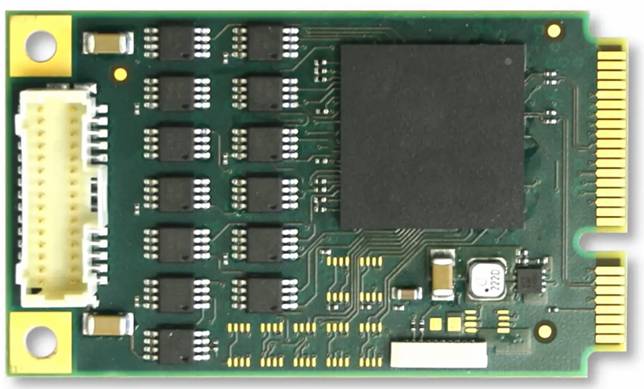
HYDROGEN™ is a VHDL project for the development of a V-SLICE Processing
Element that can speed up the implementation of the MYTHOS™(*) algorithm with
Hyper-Dimensional input data. Memory distribution and daisy-chain connectivity
parallelize the inference process in the vector dimensionality. (*)Mythos™ is a technology designed to obtain SIMD (Single Instruction Multiple
Data) parallelism on a Von Neumann machine, for Pattern Recognition problems.
Although the current processors are "Multi-Core", they cannot be
compared to SIMD / MIMD (Multiple Instructions Multiple Data) processors,
especially due to the limited number of cores, and are still considered as
Von Neumann machines. For this reason there are GPU coprocessors that serve
to have massive parallelism of the SIMD and MIMD type. In many cases it is
not possible or not desirable to use parallel coprocessors: the algorithms of
Mythos™ technology are designed for Pattern Recognition
applications with the aim of increasing the performance on Von Neumann
machines by orders of magnitude when a SIMD parallelism would be required by
the application. In particular, the Mythos™ technology is oriented
towards Pattern Recognition applications in the Aerospace sector, where
Radiation-Hardened processors / SBCs such as the RAD750® produced by BAE Systems must
be used. RAD750® SBC is the workhorse of the space industry, powering more
than 100 satellites that carry out a variety of space missions.
Radiation-Hardened processors must operate at lower cock frequencies than
those typically used by processors operating in sectors that do not have this
criticality. The need for execution speed in algorithms seems
now forgotten due to the widespread use of parallel SIMD and / or MIMD
processors such as high clock frequency GPUs. In reality, there are sectors,
such as aerospace, in which high clock frequencies cannot be used and given
that Radiation-Hardened GPUs have not yet been implemented, the research on
algorithms that allow to speed up Pattern Recognition problems by orders of
magnitude becomes a current need. |
|
|
|
General Synaptics Aerospace_and_Defence_Machine_Learning_Company VAT NUMBER:_IT02670700992 REA NUMBER: GE-503104 Email:_luca.marchese@synaptics.org |
|
|
|
Copyright© 2026 General Synaptics |