|
|
|


|
Safety_Critical_Machine_Learning |
|


What is Third-Wave AI?
The
Defense Advanced Research Projects Agency (DARPA) has defined three waves of
artificial intelligence:
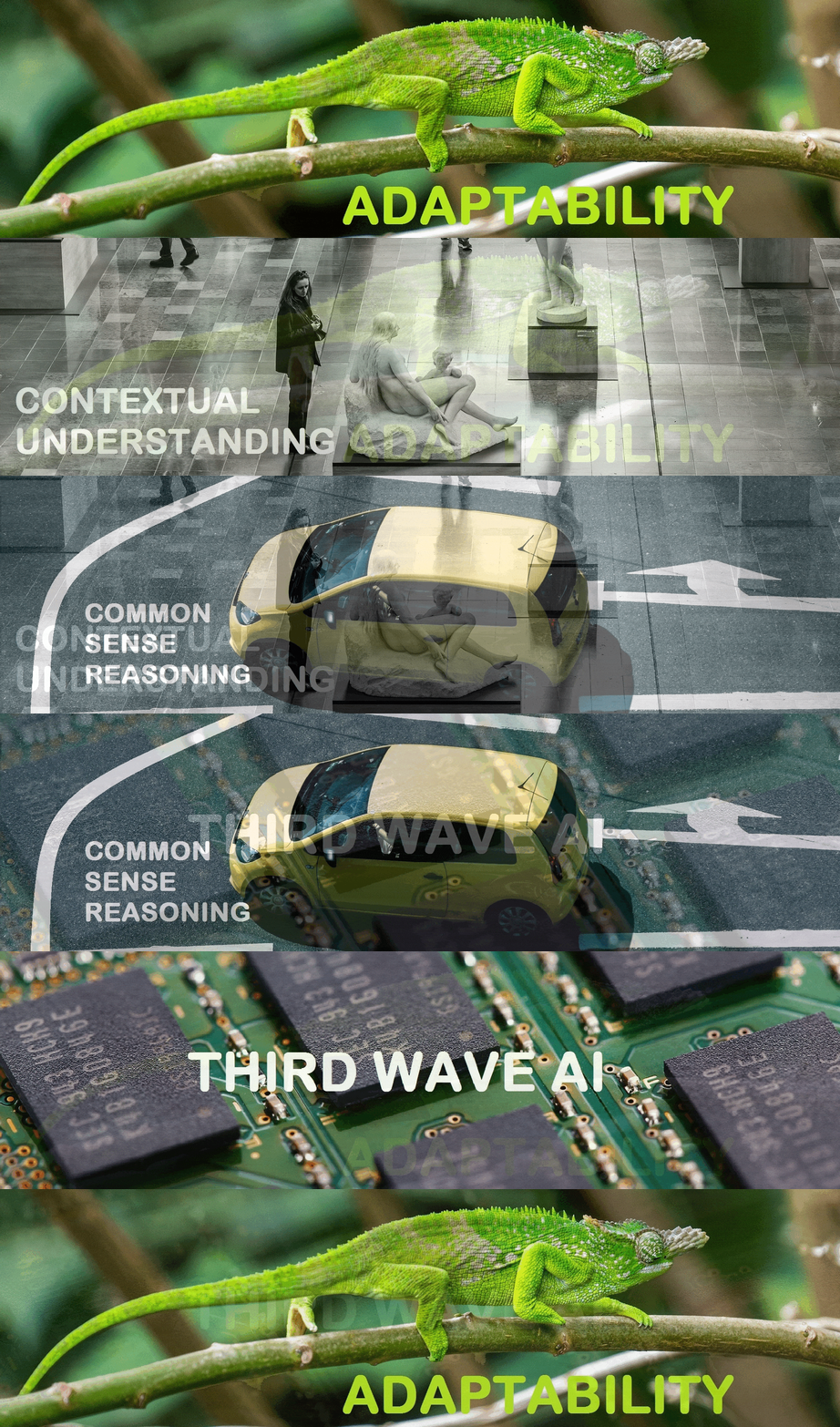
DARPA proposes that Third-Wave AI
systems can understand context, leverage that contextual understanding for
common sense reasoning, and adapt to changing contexts. This will enable more
natural and intuitive interactions between AI systems and human users. Key
factors are:
|
|
We do research
on the following key factors:
|


|
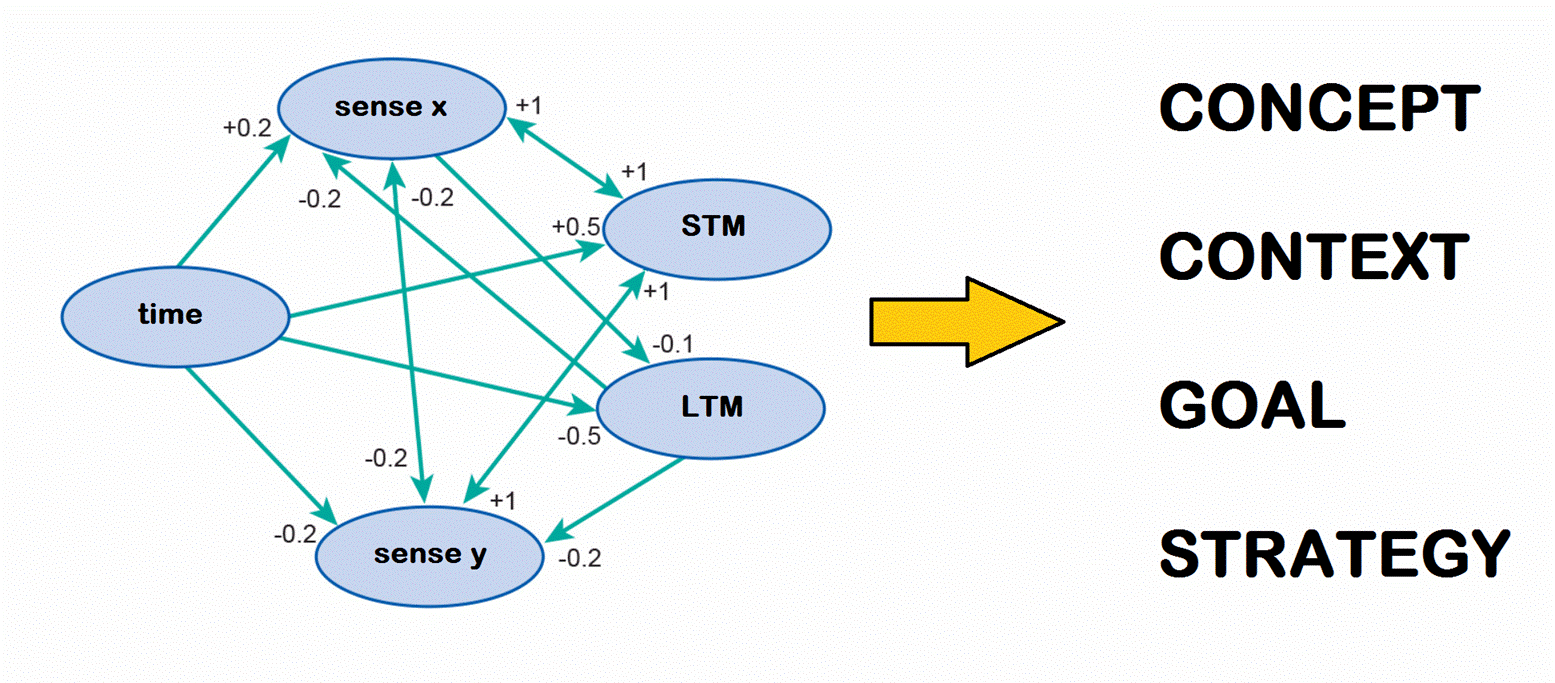
We design
basic Machine Learning Agents which
can be interconnected in a complex cognitive system. These algorithms can
cooperate in a swarm intelligence context through communication channels that
correspond to different information flows relating to different sensory and
temporal dimensions. These agents are based on Machine Learning models that
have the following characteristics:
|
|
NOT SIMPLE
STATISTICAL MULTIMODAL MODELS BUT COGNITIVE
MULTIMODAL MODELS (TIME AWARE
STM/LTM ENTANGLED MODALITIES) Learning Adaptive
Evolving Fuzzy Cognitive Map (LAE-FCM™) The COGNITIVE INTELLIGENCE is organized as a Learning
Adaptive Evolving Fuzzy Cognitive Map (LAE-FCM™)
□ “SENSE” CAN BE A PRIMARY
SENSE: SIGHT, HEARING, TOUCH □ “SENSE” CAN BE ANY
STRUCTURED INFORMATION DERIVED FROM THE PRIMARY SENSES: LANGUAGE, TEXT, SHAPES □ “SENSE” CAN BE ANY POSITIVE
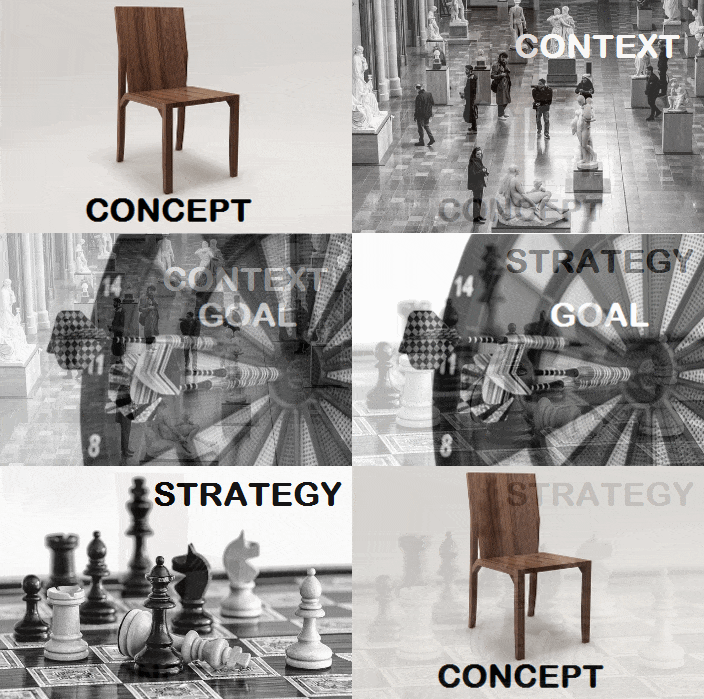
OR NEGATIVE EMOTION □ “SENSE” CAN BE A TARGET OR
A STRATEGY TO GET IT AND BOTH ARE A CONCEPT □ …EVERYTHING IS ENTANGLED IN
A SPACE AND TIME DOMAIN…
Emulating
intelligence means building a model that replicates stimulus-response
associations: this is what current LLM and multimodal AI models do. Simulating
intelligence means trying to reproduce the internal processes that build
it: this is what we try to do with our models. |

|
|
|
General Synaptics Aerospace_and_Defence_Machine_Learning_Company VAT NUMBER:_IT02670700992 REA NUMBER: GE-503104 Email:_luca.marchese@synaptics.org |
|
|
|
Copyright© 2026 General Synaptics |